
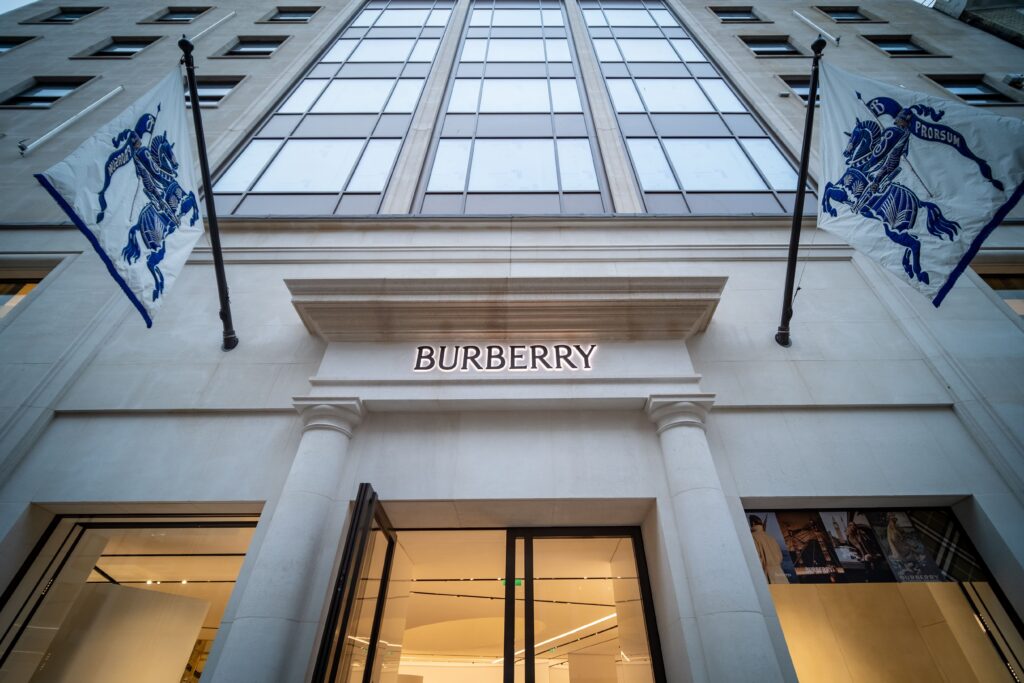
Burberry
In an era where climate change directly impacts the ecosystems supplying the world’s finest raw materials, securing the future of luxury fashion requires moving from ambition to actionable intelligence.
In this video case study, discover why Burberry partners with Risilience to translate complex climate science into a clear, audit-ready strategy for operational resilience. By leveraging the Risilience platform, Riise, Burberry is taking a data-driven approach to map physical risks across its extended supply chain, protect vital sourcing locations, and capture sustainable growth opportunities, all while seamlessly aligning its corporate disclosures with the TCFD framework.
“We will use the Risilience platform to determine key risk areas for Burberry and understand their potential impact on our operations and extended supply chain. For example, it will help us to identify the raw materials and supply chain locations that have high exposure to climate change and will enable us to mitigate climate risks. These insights will inform how we adapt our strategy to future proof our business as well as identify opportunity areas for advancing a sustainable business. And finally, the platform will also be key in supporting us to advance our disclosures in line with the TCFD framework.”
— Pamela Batty, Vice President of Corporate Responsibility, Burberry
Watch the Burberry Video Case Study
VIDEO TRANSCRIPT
Climate Change as a Core Business and Social Imperative
“So climate change is not just a future environmental risk. It’s a social and economic crisis that is impacting millions around the world. Today, we’re really committed to building not only a financially stronger Burberry, but also a better company that is a force for good in the world.
We’re actively working to reduce our environmental footprint and meaningfully support our global communities, seeking to transform our industry as part of our climate scenario analysis.”
Analyzing Short and Long-Term Risks
“We’re focusing on the short and the long-term effects of climate change in order to determine what the potential impacts of such risks could be. This work outlines the steps Burberry may need to take in order to improve our resilience to such risks.
In the short term, we’re already seeing that climate change is having a direct impact on consumer preferences. Our recent consumer survey showed that 92% of consumers think sustainability is important when buying luxury fashion. This shifting preference gives us a clear opportunity to positively drive change, such as by investing in alternative materials like Econyl and ensuring that all of our products contain at least one positive attribute.
In the long term, the physical risks of climate change will create new challenges for our industry. This includes potential disruption of our key facilities, including stores and distribution centers, and to our wider supply chain for key raw materials. Our work [with Risilience] will allow us to be better equipped to respond to these challenges, should they arise.”
Pledging to Become Climate Positive by 2040
“In June, we became the first luxury brand to pledge to become climate positive by 2040. This means we will go beyond net zero by investing in initiatives to tackle climate change beyond our own value chain.
As we look further into the future, we expect innovation to accelerate and are actively exploring how we can significantly reduce the emissions associated with sourcing virgin raw materials.”
Leveraging the Risilience Platform to Secure the Supply Chain
“We’ll use the Risilience platform to determine key risk areas for Burberry and understand their potential impact on our operations and extended supply chain. For example, it will help us to identify the raw materials and supply chain locations that have high exposure to climate change, enabling us to mitigate these risks effectively.
These insights will inform how we adapt our business strategy to future-proof our operations, as well as identify key opportunity areas for advancing a sustainable business. Finally, the platform will also be key in supporting us to advance our disclosures in line with the TCFD framework.”
Collaboration and Joint Action: Achieving Net Zero Together
“Burberry’s commitment to sustainability is long-standing. It’s grounded in the belief that for our future growth, we need to actively address the challenges facing the fashion and luxury industry and the world in which we operate. We recognize the power of working collaboratively to drive real change, and are focused on working together with industry peers, business partners, and other key stakeholder groups to find long-term solutions and promote wider industry change.
Climate positive is not something one company can achieve alone. By the time we reach climate positive in 2040, our suppliers and partners will also need to be net zero. Some suppliers may require support and guidance in transitioning to net zero, and that’s why collective action, information sharing, and industry collaboration is key in helping drive the fashion industry towards a more sustainable future.”
Setting a New Luxury Benchmark for the Global Fashion Industry
“We believe the luxury sector has an important role to play in setting a new standard for the fashion industry as a whole. As a luxury leader, we can help set a benchmark in terms of responsible sourcing for the wider industry and inspire customers to be more considerate of how their clothes are made.
We’re proud of our climate change initiatives, which are continually evolving as we find new ways to rise to the challenge posed by the climate emergency.”