
The California Climate Acts
The California SB 253 & SB 261 will require companies doing business in California and with annual revenue of over $500M to publish climate related financial risk reports in accordance with TCFD/ IFRS. We can help.















How Risilience Can Help You Comply with the California Climate Acts
Find out how Risilience can prepare your business for the California Climate Acts.
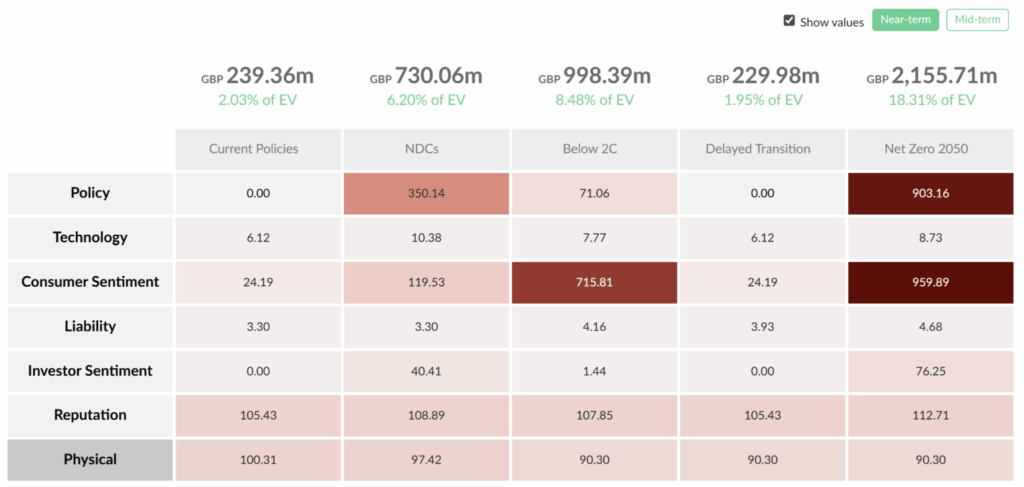
Risk Identification
Risilience helps you identify the material climate-related financial risks your company faces.
Our analysis covers both physical risks that could impact your operations and supply chain and transition risks as the world moves towards a lower-carbon economy.
Our solution helps pinpoint relevant risks based on your operational footprint, industry sector, and value chain, aligning with the qualitative and quantitative disclosure requirements of SB 261 and other regulatory frameworks including ISSB and CSRD.
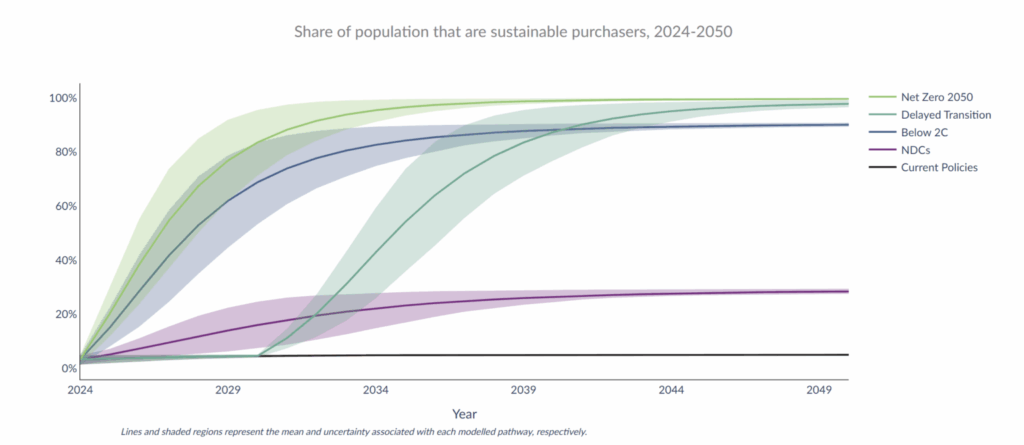
Scenario Analysis
To assess the potential impact of identified risks, SB 261 requires companies to conduct climate-related scenario analysis to understand how different climate futures could impact your business strategy, operations and financial performance over short, medium and long-term horizons.
Risilience can help you model the potential effects of these scenarios on your assets, liabilities and overall financial position, utilizing scenarios derived from the Network for Greening the Financial System (NGFS). We supplement these scenarios with additional information on consumer trends and liability risks to provide a holistic understanding of potential business impacts. Our tools provide the forward-looking insights necessary for robust disclosure.
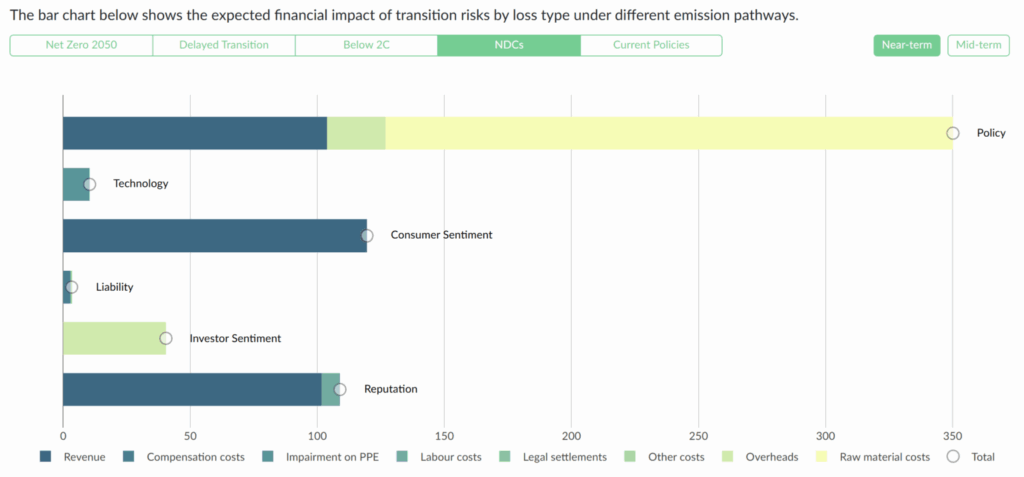
Financial Impact Quantification
Risilience helps translate climate risks into tangible financial impacts.
This step involves quantifying the potential financial implications of both physical and transition risks on your company’s revenue, costs, capital expenditures, asset valuations, and access to capital.
Our analytics help you estimate these impacts, providing the data-driven insights needed to demonstrate the materiality of climate risks to investors and stakeholders, and to integrate these considerations into your broader financial planning.
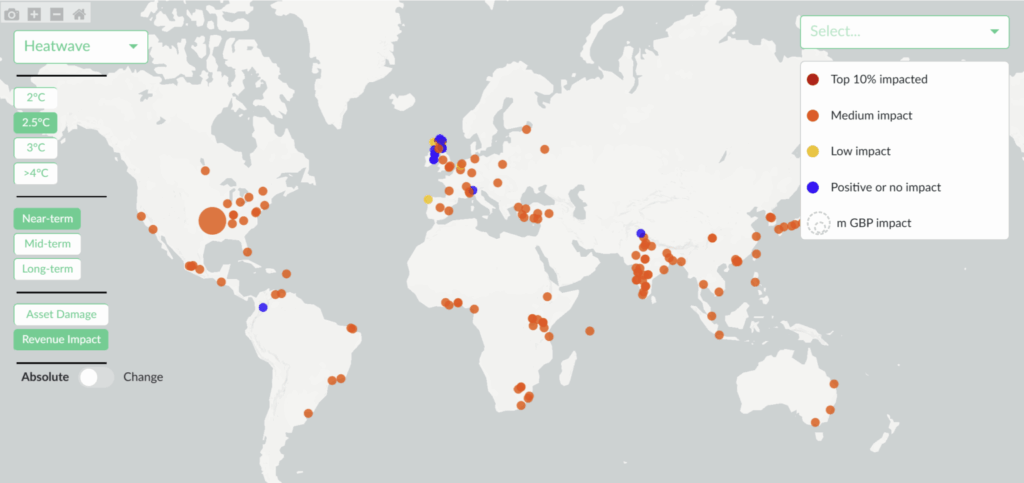
Report on Key Metrics and Targets
Risilience provides the relevant metrics used to assess climate-related risks and opportunities in line with your strategy and risk management processes.
While SB 261 primarily focuses on financial risk, it implicitly encourages the disclosure of strategies to mitigate and adapt to these risks, which may involve reporting on relevant internal or external targets to demonstrate progress and commitment.
Our solution helps you identify meaningful targets and key metrics that can be used for reporting and tracking purposes, ensuring alignment with SB 261 and TCFD disclosure recommendations.
Risilience Resource
The California Climate Acts: What You Need to Know
Learn how to navigate the California Climate Acts guidelines.



California Climate Acts FAQs
What are the California Climate Acts?
The California Climate Acts currently comprise four approved acts: the ‘Climate Corporate Data Accountability Act’ (SB 253), requiring disclosure of scope 1, 2 and 3 greenhouse gas emissions; the ‘Climate-related Financial Risk Act’ (SB 261), requiring disclosure of climaterelated risks and steps taken to mitigate those risks; the ‘Greenhouse Gases: Climate Corporate Accountability: Climate-related Financial Risk Act (SB 219), which makes minor amendments to the implementation timelines for SB 253 and SB 261; and, the Voluntary Carbon Market Disclosures Act (AB 1305)5, which requires disclosure of the use of voluntary carbon offsets. A further bill, ‘Net Zero Greenhouse Gas Emissions Goal: Carbon Dioxide Removal’ (SB 285) was introduced to the state legislature in February 2025 and seeks to limit the type of carbon offsets permitted for disclosure under SB 253.
The four acts have been approved by the legislature and signed by State Governor Gavin Newsom, with the California Air Resources Board (CARB) now responsible for developing and adopting the regulations necessary to implement the new disclosure regime. Having missed the previous January 1, 2025 deadline, SB 219 gave CARB until July 1, 2025 to implement the necessary regulations – a deadline CARB did not meet, with implementing regulations for SB 253 now in the ‘early stages of regulatory development’6. SB 285 is relatively early in the legislative process, but marks the next step in California’s expanding climate disclosure landscape and is certainly one to watch.
When is the first climate-related financial risk report due under the CCA?
Covered entities must prepare and publish their first report by August 10, 2026.
Which companies are in scope of the CCA?
Both public and private companies with annual revenues exceeding $500m doing business in California.
What must companies disclose in their CCA reports?
In-scope companies are required to assess and disclose both physical risks (e.g., climate-related damage to assets) and transition risks (e.g., policy, legal, and market changes associated with moving to a low-carbon economy), as well as the measures adopted to reduce and adapt to these risks.
What kind of climate risk analysis is required?
The CCA mandates multi-horizon scenario analysis, which includes: Near-term (up to 5 years) Medium-term (up to 10 years) Long-term (2050 and beyond) These must be aligned with Task Force on Climate-Related Financial Disclosures (TCFD) frameworks or an equivalent standard such as the IFRS Sustainability Disclosure Standards.