Private Equity
Risilience supports Private equity (PE) firms to identify, assess, and manage climate and environmental risks within portfolio companies, driving sustainable value creation and mitigating potential liabilities.
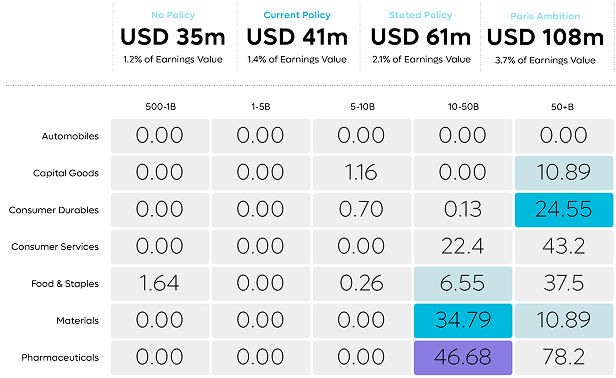
The Cost of Overlooking Climate Risk
Climate change and environmental factors are increasingly impacting every stage of the investment lifecycle – from deal sourcing and due diligence to portfolio management and exit planning.
Hidden Liabilities and Stranded Assets
Unquantified environmental liabilities, such as historical pollution and compliance breaches, or assets vulnerable to physical climate risks, including floods and wildfires impacting facilities, can severely diminish asset value.
Transition Risk Exposure
Portfolio companies in carbon-intensive sectors face significant financial exposure to evolving climate policies, carbon pricing and shifts in consumer/market demand towards sustainable alternatives.
Suboptimal Value Creation
Missing opportunities to drive operational efficiencies through improved resource management, or to capitalize on green market trends, can leave significant value unrealized.
Reputational Damage and LP Scrutiny
LPs are increasingly demanding robust integration and transparent reporting on climate risks, with a failure to comply potentially impacting fundraising and future capital allocation.
Challenged Exit Strategies
Buyers are increasingly scrutinizing environmental performance and climate resilience, making it harder to exit assets with unaddressed climate/environmental risks or a poor profile.
Embed Climate and Environmental Insights to the Investment Process
Rislience provides comprehensive climate and environmental risk analytics tailored to the specific needs of private equity firms. Our solutions proactively identify, quantify, manage, and ultimately create value across the entire investment process.
Supporting Private Equity Strategy
Incorporating Climate Risk in Due Diligence
The Risilience-powered platform, Riise, provides scientifically informed datasets to incorporate climate risk into the due diligence process when data is limited, allowing deal teams to assess strategic risks and opportunities across different sectors as the global economy decarbonizes.
- Screen and evaluate targets
Quickly screen prospective companies for material climate risks and opportunities to inform acquisition underwriting and deal origination. - Augment benchmark datasets
Leverage Synthetic Digital Twins based on sectoral averages and augment them with company-specific data. - Incorporate into valuation
Translate transition and physical exposures into financially quantified risk metrics to incorporate into valuation models and pricing.
Portfolio Company Engagement
Riise serves as an interactive tool to engage with select portfolio companies to create, monitor and cost decarbonization plans. Align climate strategies with value creation opportunities to evaluate the return on investment of mitigation initiatives.
- Assess the cost of inaction
Conduct financially quantified climate risk and opportunity assessments to build a robust business case for mitigation. - Test 'What if?' scenarios
Model the financial implications of various decarbonization scenarios, including carbon taxes and renewable energy mandates, on the target company's revenue, costs and competitive landscape. - Optimize transition pathways
Use glidepath analysis to align targets to existing standards (such as SBTi) and generate Marginal Abatement Cost Curves (MACC) to optimize the list of transition levers.
Portfolio Management
Riise enables General Partners to rapidly construct, assess and optimize portfolios for internal and external reporting. This consolidates individual company Digital Twins into a single portfolio view to meet regulatory and investor requirements.
- Identify climate hotspots
Assess physical and transition risks at the portfolio or fund level to understand vulnerabilities and evaluate combinations to mitigate aggregate risk. - Streamline regulatory reporting
Deliver on-demand, climate reporting across multiple regulatory frameworks, including TCFD, ISSB, CSRD and California SB 261, with pre-populated templates. - Support exit strategies
Position the portfolio company's existing climate strategy and progress for M&A, IPO, or vendor due diligence, demonstrating documented risk management for potential buyers.

Private Equity | Financial Institutions Solutions
The Value Proposition
-

Mitigate Financial Risk
Proactively identify and quantify climate and environmental liabilities, preventing value erosion and protecting investor capital.
-
Unlock New Value
Identify and capitalise on opportunities for operational efficiency, growth in sustainable markets, and improved competitive positioning.
-
Enhance Deal Flow and Exit multiples
Differentiate an organisation by demonstrating superior climate and environmental risk management, attracting LPs and commanding higher valuations at exit.
-
Strengthen LP Relationships
Meet and exceed LP demands for robust and transparent climate-and-nature related disclosures.
-
Fulfill Fiduciary Duties
Ensure a comprehensive approach to risk management that includes forward-looking climate and environmental considerations.
-
Build a Future-proofed Portfolio
Invest in companies poised to thrive in a global economy increasingly shaped by climate change and sustainability imperatives.
Don't Just Take Our Word for It

Using the EVTR File has helped us to identify underlying investments with potential exposure to climate-related transition risk as part of the firm’s pre-investment ESG screening, as well as to analyse exposure to transition-risk in existing portfolios, as part of our post-investment monitoring and reporting.
Yohan Hill
Director of ESG and Responsible Investing
Adams Street Partners
Ready to Learn More?

Value Chains Under Pressure: Navigating Physical Climate Risk Across Multi-Year Horizons

Interconnected Risk and Measurable Returns: What Climate Week NYC 2026 Means for Enterprise Strategy