
Navigating Corporate Water Stress and Supply Chain Risk
A warmer global climate is fundamentally altering the water cycle, creating severe operational and supply chain vulnerabilities for businesses worldwide. Charlie Friend, Senior Environmental Consultant at Risilience, sets out how advanced agricultural water-balance modeling and site-level vulnerability assessments can help corporations quantify risks, secure business continuity and protect revenue.
Climate Change and the Changing Water Cycle
As global temperatures continue to rise, precipitation patterns are shifting in complex ways. While total rainfall is not directly tied to warming, overall water availability is projected to decrease globally. This widespread reduction is driven by increased evapotranspiration, where rising temperatures accelerate water transfer from land to the atmosphere, which ultimately neutralizes the benefits of increased rainfall and worsens dry periods. Even in regions where average annual precipitation remains stable, many face more volatile extremes: summers are becoming significantly drier, while winters are becoming wetter.
Agricultural Supply Chain Vulnerabilities
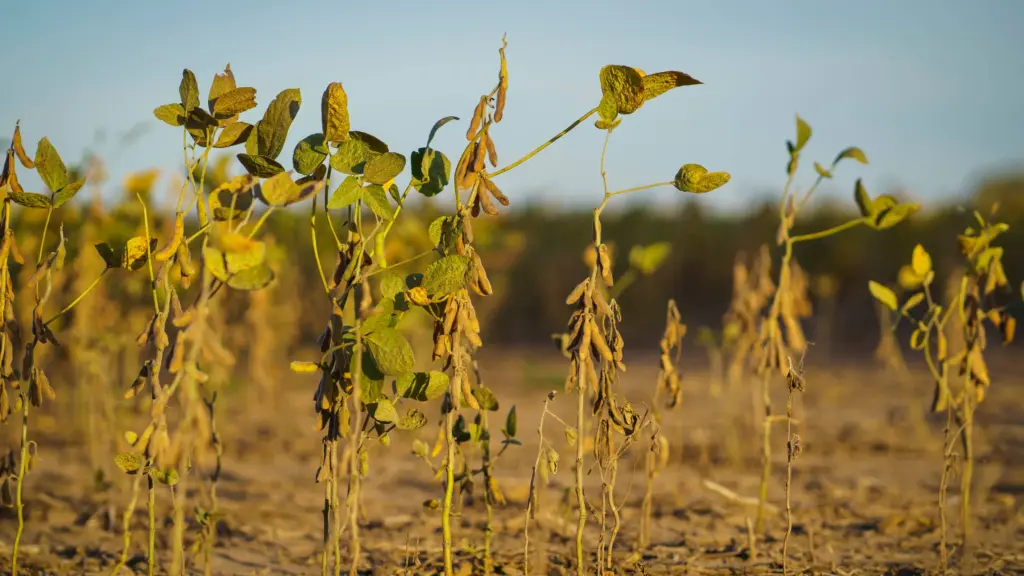
Crops are highly sensitive to water shortages during critical development phases, particularly flowering and grain filling. Drought during these specific windows can cause devastating yield losses. While irrigation has historically shielded crops from seasonal dry spells, escalating competition for shared water resources is transforming irrigation from a simple cost calculation into a fundamental challenge of viability. To mitigate these risks, regenerative agriculture practices are increasingly being adopted by businesses, including Nestlé and Unilever, to improve soil water retention and shade crops to reduce evaporation.
Advanced Modeling for Raw Material Security
To help businesses navigate these agricultural disruptions, Risilience has expanded its model capabilities to capture the complex dynamics that affect yields throughout the growing season. Building on our analysis of chronic, temperature- and precipitation-driven shifts in regional growing suitability, new models simulate daily water balance equations on crops.
By integrating precipitation, evapotranspiration, and soil type, this approach identifies when water stress occurs and attributes its impact based on the crop’s specific growth stage. Additionally, the framework incorporates adaptation strategies such as irrigation and regenerative agriculture to help companies quantify how active interventions can reduce yield risks.
Operational Water Stress and Regulatory Shifts
Beyond agriculture, water is a critical operational input for manufacturing, cleaning, and cooling. With the growth of water-intensive industries from technology to textiles, regional water demand is rising in areas already suffering from severe scarcity. Because withdrawals from licensed wells and boreholes have historically faced limited regulation, unsustainable water consumption has largely gone unmonitored, prompting companies to question how long their wells can meet their needs.
Water is both a corporate commodity and a community must-have, so it is necessary for government policy to strengthen around water withdrawal controls in areas where demand is starting to outgrow supply. This is already evident in Australia’s Murray-Darling Basin, where water allocations are strictly determined at the end of each winter.
Simultaneously, the rapid growth of data centers to support AI has introduced water demand for cooling in already highly stressed basins, intensifying the scrutiny on existing commercial water users. In the US, several States have initiated moratoriums to halt the development of data centers, and there are reports of negative sentiment from local communities concerned about grid stability, water depletion, land use, and rising utility bills spreading across Europe.
While long-term water depletion is a growing threat, short-term deficits are already being exposed during droughts when municipal systems fail, leading to restrictions, including hosepipe bans. These controls are expected to expand from residential households to businesses, alongside rising water prices to fund infrastructure upgrades, such as reservoirs and leak repairs.
How to Secure Business Continuity and Site-Level Resilience
For organizations seeking to secure their operations, location-based, physical modeling can help to identify and mitigate water risks. Risilience maps key facilities against data layers for present day water stress to quickly screen where the risk sits. Water stress here is a basin-level measure of the ratio of water demand to water supply.
The next step looks at future scenarios for water stress that consider both climatic changes and socio-economic development of demand. This helps to understand how water stress at key facilities will change in the future. Impending pressure on water supply can then be investigated using assumptions around government policies and water pricing to understand the operational impact to the business.
Groundwater availability serves as a critical operational buffer. When companies extract water from aquifers faster than natural recharge rates, this vital buffer disappears, leaving operations highly vulnerable to sudden, severe disruptions when wells run dry during a drought. Incorporating groundwater levels and drought frequency into risk models, rather than relying solely on surface-level water stress metrics, is therefore essential to pinpoint exactly when and how often a site’s water security will be exposed.
While regional basin stress indicates broad exposure, a site’s actual risk depends heavily on local infrastructure capacity, alternative supplies, and community relations. For instance, facilities in areas with large desalination plants can bypass their dependency on rainfall by absorbing the higher energy costs of turning saltwater into freshwater. Conversely, regulatory controls and local community needs to heavily dictate operational viability. Excessive corporate water use in water-scarce communities also presents significant reputational hazards as well as enforced disruption to operations.
Faced with the many complex risks impacting water availability, site-level analysis needs to be conducted to create a more detailed view for the highest priority sites, shortlisted based on revenue at risk from prior screening. By deploying surveys at key sites, businesses can establish a vulnerability assessment that maps how physical water shortages will directly impact operational revenue.
Water Security is a Material Risk to Enterprise Value
As physical climate impacts and regulatory pressures converge, water stress can no longer be treated as a localized utility issue – it is a material risk to enterprise value. For global businesses to protect their supply chains and operational footprint, water security must become a central pillar of the corporate risk agenda. While the impact of water stress on obtaining a reliable supply is highlighted here, a responsibility to dispose of wastewater sustainably also remains a key environmental consideration.
Standard water security poses broad operational threats, but highly sensitive industries such as healthcare and pharmaceuticals face severe exposure because their critical processes rely on ultrapure water (UPW). The complex purification technologies required to eliminate contaminants to meet stringent global medical standards bring substantial treatment costs and increased operational risks if the source water quality fluctuates or is disrupted.
Securing this continuity requires a sophisticated, multi-risk modeling approach that integrates regional basin trends, daily water balance dynamics, and localized site vulnerabilities. Only by translating these physical hazards into clear, actionable risk insights can executives gain the foresight needed to deploy targeted mitigation strategies and protect long-term operational resilience.