
Award-winning climate risk MODELLING
Leverage Science-Backed Climate Risk Modelling
- Climate risk platform and expert advisory
- Transparent and auditable methodologies
- Faster decision-making
- Predictable costs













CLIMATE RISK MODELLING
Simulate Scenarios & Quantify the Impact of Climate Risk
- Protect Your Value Chain: Assess climate risk across operations in real time to stop costly disruptions
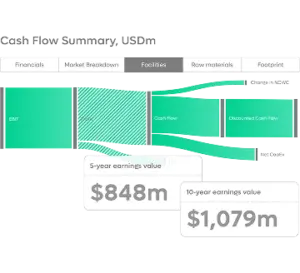
- Secure 5-to-10-Year Clarity: Integrate physical operations and cash flows to validate transition ROI
- Link Hazards to Bottom Line: Map assets, logistics, and Scope 1–3 emissions to financial line items
- Strategic Decision-Making: Stress-test decarbonisation and mitigate regulatory compliance risks
QUANTIFY FINANCIAL RISK
Turn Risk into Financial Intelligence
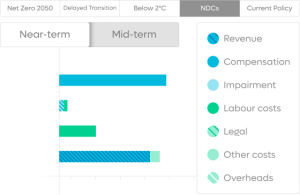
- Predict Future Pathways: Simulate financial variables (inflation, carbon pricing) across 49 regions to secure long-term performance
- Stress-Test Disruptions: Model low-probability, high-impact disasters and sudden regulations to safeguard asset values
- Quantify Transition Shocks: Project the impact of policy shifts, carbon taxes, and market realignment on costs and revenue
- Mitigate Physical Damage: Analyze location-specific hazards to predict downtime, recovery timelines, and repair costs
FINANCIALLY QUANTIFIED SCENARIO ANALYSIS (FQSA)
Model Asset-Level Disruption & Quantify Physical Exposure
- Forecast Extreme Weather Probabilities: Leverage climate risk modelling to generate probability distributions and return periods for acute hazards like floods, wildfires, and droughts.
- Map Operational Downtime: Calculate impacts and costs to build long-term, structural value-chain resilience
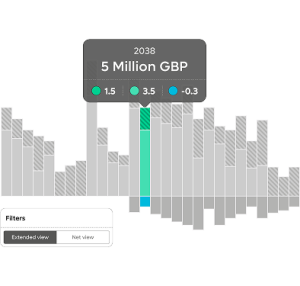
- Translate Hazard Maps into Cash Flows: Leverage dynamic risk management scenario analysis that quantify physical climate events
- Optimize Resilient Capital Allocation: Guide strategic investments ensuring your organisation moves first on high-ROI adaptation strategies
Don’t Just Take Our Word For It

Transition risks are expected to be the most impactful in the short to medium term, continuing the trends our five-year scenario analysis identified, as they relate to events such as policies and market behavior that are either current or anticipated to come into effect in the near future.
Burberry, p50, Annual Report 2025

Our approach to understanding climate-related risks and opportunities is underpinned by scenario analysis. Climate and enterprise analytics technology (developed by the Cambridge-based consultancy Risilience and built on research and frameworks pioneered by Cambridge Centre for Risk Studies) provides quantitative analytics that inform risk management and decision-making across the Group.
Reckitt, p218, Annual Report 2024

Scenario analysis allows us to better understand the impact of climate change and how it could affect our company. It is a critical tool for strategic and financial planning and risk management.
Nestlé CDP Corporate Questionnaire 2024, P156

In partnership with Risilience… we have piloted an Earnings Value at Risk model to quantify potential financial impacts from both climate and nature-related factors. By simulating ‘what if’ scenarios, such as supply chain disruptions, acquisitions, or product shifts, we enable companies to assess their exposure to financial and operational risks and to build resilience into their business models.”
Barclays, P27, Transition Update 2025
Risilience is Award-Winning and Backed by Science
Platform partner to the Cambridge Centre for Risk Studies University of Cambridge, UK.
Recognized by Verdantix for Market-Leading Physical Climate Risk Capabilities

2024 winner of the King’s Award for Enterprise in the Innovation category.
Book a Demo
Book a demo of the award-winning Riise platform with one of our expert consultants
Climate Risk Modelling FAQs
What is climate risk modelling?
Climate risk modelling simulates how future environmental pathways and macroeconomic variables affect your global operations, projecting asset valuations and transition ROI.
Why is climate risk management and scenario analysis essential for modern enterprises?
Conducting structured climate risk management and scenario analysis bridges the gap between scientific climate models and financial statements, protecting cash flows from regulatory shifts.
How does a financially quantified risk management scenario analysis differ from qualitative risk maps?
Qualitative maps only show risk levels, whereas risk management scenario analysis translates abstract carbon taxes and extreme weather risks directly into balance-sheet liabilities.
Can Riise model low-probability, high-impact climate events?
Yes, Riise climate risk modelling enables organisations to stress-test sudden policy changes, transition shocks, and acute physical disasters to ensure robust, long-term business continuity.