

Making more of sustainable retail: accelerating Morrisons’ journey to net zero
As one of the UK’s largest supermarket brands, Morrisons is transforming the future of retail sustainability through its Sustain programme. Now targeting a 30% Scope 3 reduction by 2030 from its 2019 baseline, closing critical value-chain data gaps with financially-quantified analytics is essential to meeting its sustainability ambitions.
Surfacing and quantifying climate risk across Morrisons’ complex retail value chain.
Progress under the Sustain programme has seen significant achievements, including a 26.75% reduction in Scope 1 & 2 emissions and a 40.7% cut in plastic packaging since 2017. This progress has set a strong foundation, but achieving full visibility of the organisation’s value chain emissions – which represent approximately 98% of it’s total carbon footprint – will require advanced data analytics to pinpoint where Morrisons’ biggest impacts lie, and transform fragmented supplier data into decision-ready insight to meet its 2030 goals.
The Risilience platform Riise and multidisciplinary team of experts support leading global retail brands in addressing their most pressing climate and nature-related business challenges:

Managing complex supplier networks with limited traceablility.
Delivering a financially quantified view of value-chain emissions and yield modelling, allowing retailers to act where emissions pose the highest operational and financial risk.
Ensuring alignment with rigorous sustainability targets while maintaining operational efficiency.
Addressing material supply linked to deforestation, land conversion, water-stress and biodiversity loss and managing increased disruptions to supply as nature impacts become more acute.
What we do
Find out how Risilience can help Morrisons on their journey to net zero.

Risk identification
Risilience can help Morrisons identify the material climate-related financial risks embedded across its retail and manufacturing operations. The Risilience-powered Riise platform uniquely assesses both physical and transition risks through a single lens, enabling companies to identify high–ROI decarbonisation opportunities and integrate sustainability into strategy.
Risilience models assess physical risks affecting agricultural supply, food production sites and distribution networks, alongside transition risks linked to carbon pricing, packaging reform and shifting consumer expectations. Risilience can pinpoint exposure across categories, suppliers and logistics routes to reveal where intervention matters most.
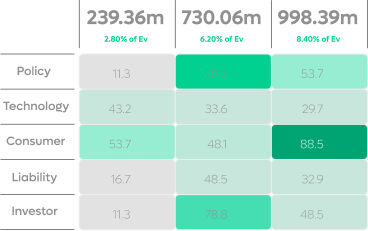
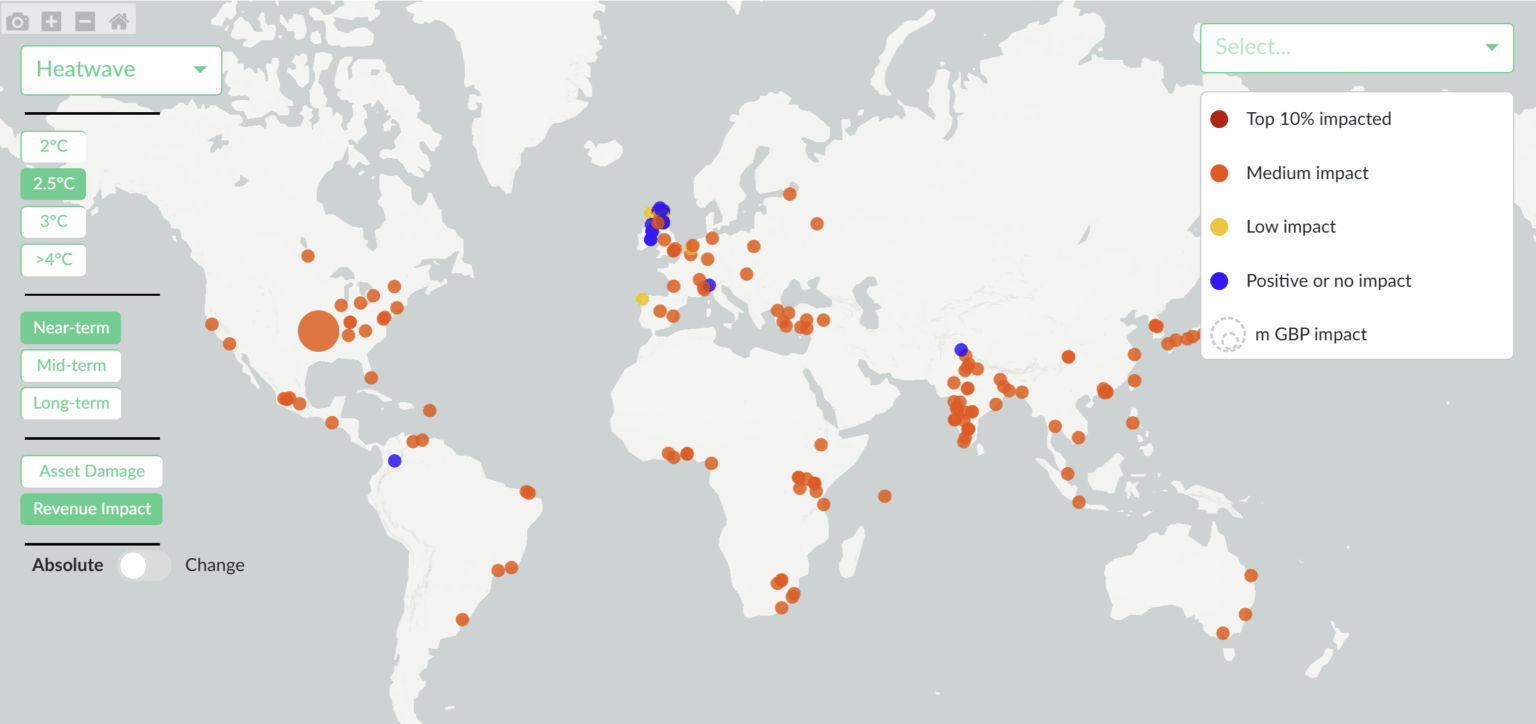
Summary financial impact of climate risk.
Yield Modelling
Climate and nature-related risks are increasingly disrupting agricultural production, making yield volatility a material threat to Morrisons’ supply chain. Risilience models ingredient yields and sourcing vulnerabilities for key commodities such as cocoa, bananas, wheat, coffee, beef and dairy across sourcing regions, revealing where key products are most exposed to climate and physical risks, helping Morrisons to ensure that the most impacted locations and immediate risks can be addressed to maximise return on investment.
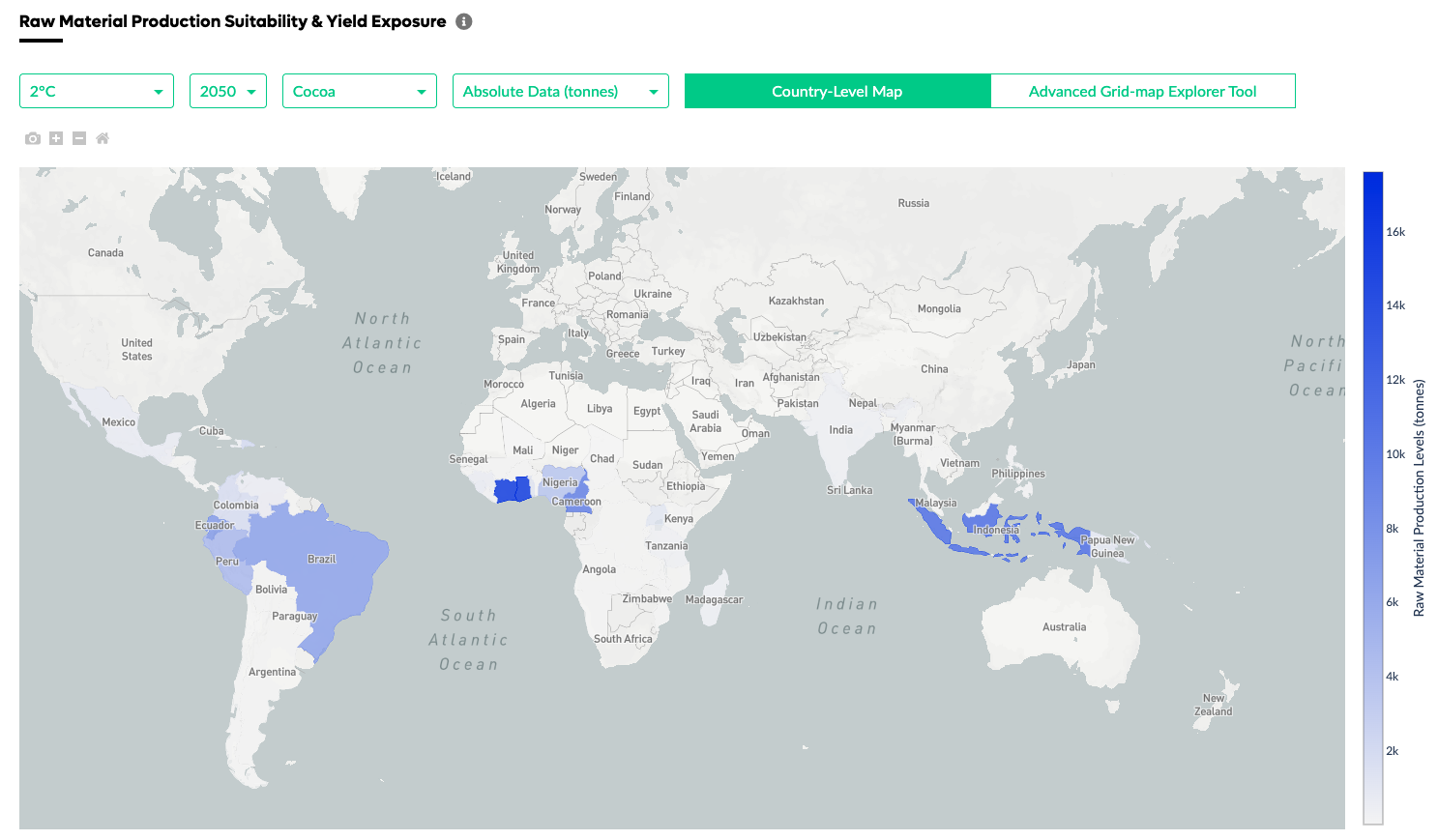
Raw material production suitability and yield exposure map for cocoa.
Scenario analysis
Morrisons’ commitments under the Sustain programme – including net-zero operational emissions by 2035, a 30% Scope 3 reduction by 2030, major plastic reduction targets and net-zero British farms by 2030 – require a clear view of how climate, regulatory and market conditions could shift in the years ahead.
Risilience models how NGFS (Network of Central Banks and Supervisors for Greening the Financial System) climate scenarios could reshape raw material supply, supplier cost pressures, transport disruptions, packaging regulations and consumer expectations. We layer in shifts in eco-labelling, liability exposure, and downstream customer demand, which gives foresight to strengthen reporting and adapt to emerging risks.
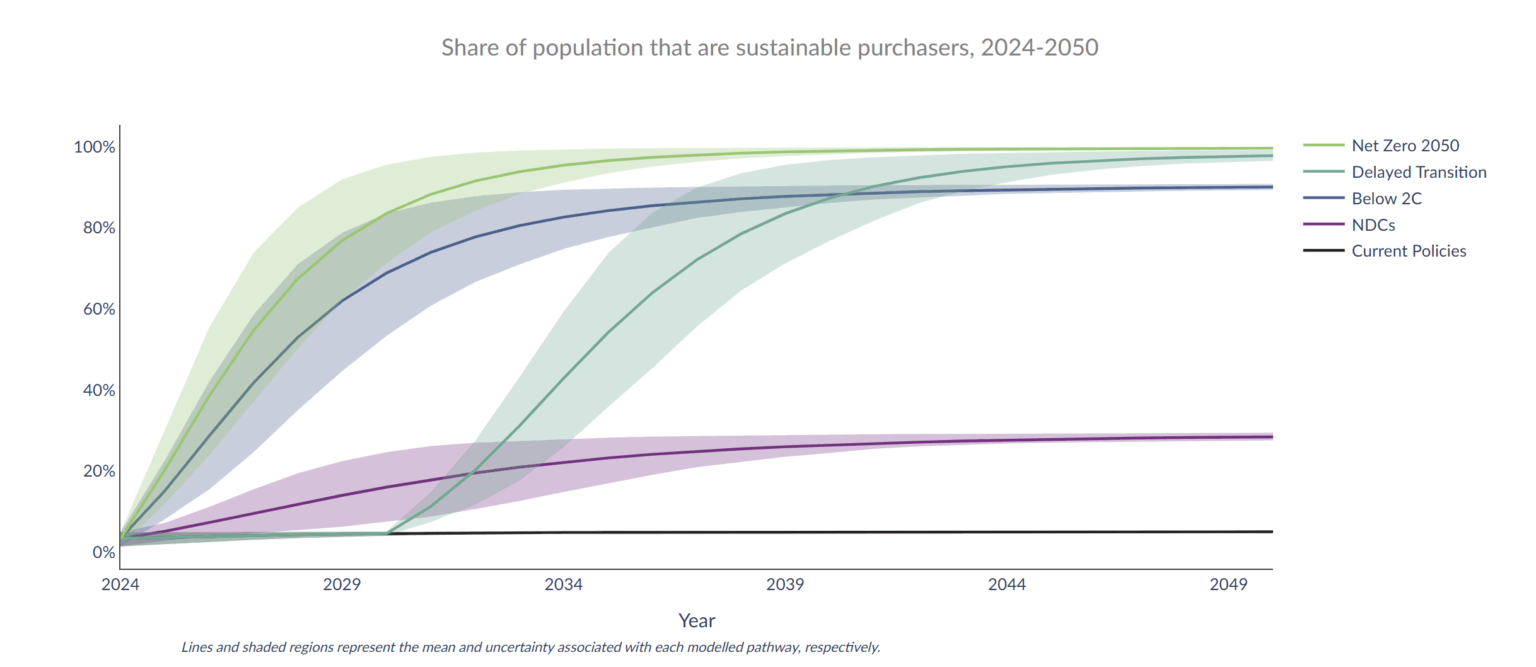
Financial impact quantification
Scope 3 emissions within Morrisons’ complex value chain remain one of its biggest challenges, and can be costly to address. Risilience translates climate threats and strategic responses into clear financial numbers: effects on revenue, cost lines, capital investments, asset valuation, and cost of capital. We provide the robust data needed to demonstrate the material impact of climate risk to investors, safeguard brand trust and embed climate and nature resilience into financial decision making
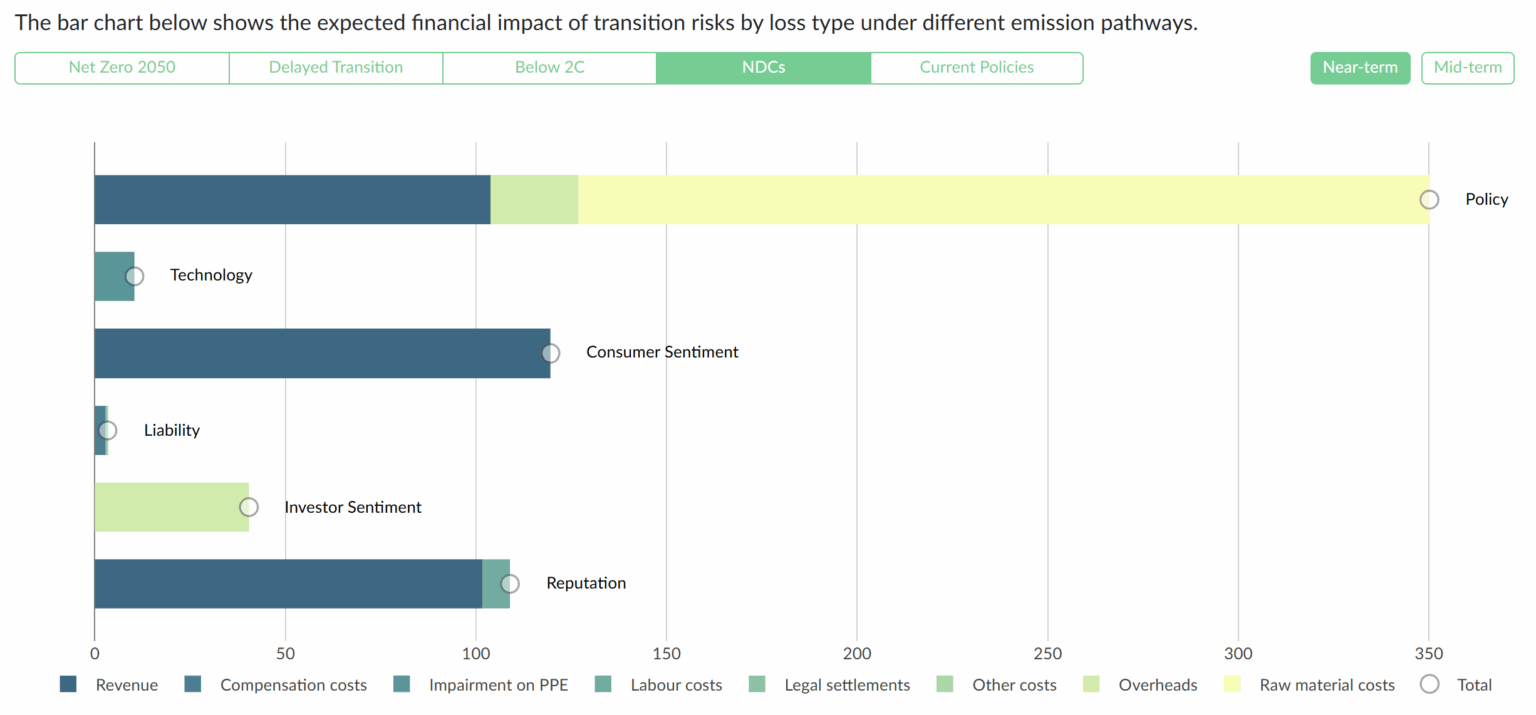
Report on key metrics and targets
Model future emissions trajectories, accounting for sectoral decarbonisation trends
Model and track decarbonisation initiatives and quantify their impact on company Earnings Value
Assess transition risks and opportunities at a country, product and enterprise level to plan resilient strategies
Map exposure to physical and nature-related risks for key commodities to support biodiversity commitments




Speak with a member of our team
Book a session with our team to explore how Risilience can help Morrisons accelerate Scope 3 reductions, leverage sustainability reporting for commercial success and turn its Sustain programme goals into measurable business results.












Climate and Nature Risk Management in Business
Stream a brand-new webinar with sustainability leaders from PepsiCo, Kenvue and Mondelēz
Climate and nature risk is rapidly reshaping strategic, operational and financial decision-making across global businesses. Hear from sustainability leaders at global brands as they discuss the climate and nature-related risks and opportunities businesses must prepare for in the new year.
Contact
Let's connect
Learn how Risilience can support your company to succeed in the low-carbon economy.
Case study: how Risilience enables Reckitt to quantify climate risk


Virtual conversation: ‘From policy lag to market shock: why businesses can’t ignore climate transition risk in 2026’